How can I tell if my brick or stone needs repair?
Brick and stone structures are built to last for decades, but even the strongest masonry will eventually show signs of wear. Weather, moisture, and time all take their toll. Knowing when to schedule repairs can save you from much larger problems down the road, like structural damage or costly restoration work.
At R.A. Masonry, we specialize in brick and stone repair, tuckpointing, waterproofing, and masonry restoration throughout Moline and the Quad Cities. Our goal is to help homeowners recognize early warning signs and understand when it’s time to call in a professional.
This guide will help you identify common issues in brick and stonework, explain what causes them, and show how timely repair can preserve the beauty and safety of your home.
Why masonry damage happens
Brick and stone are incredibly durable materials, but they aren’t immune to damage. The Midwest’s mix of cold winters, hot summers, and heavy rainfall puts constant stress on your exterior walls, chimneys, and foundations.
The most common causes of masonry damage include:
-
- Freeze-thaw cycles: Water seeps into tiny cracks, freezes, expands, and widens those cracks over time.
- Poor drainage: Downspouts that direct water toward your foundation can cause saturation and deterioration.
- Erosion or settlement: Shifting soil can lead to cracks in walls or foundations.
- Aging mortar: Mortar naturally breaks down after decades, losing its strength and watertight seal.
- Improper repairs or coatings: Using incorrect materials can trap moisture or cause further cracking.
Understanding the cause of damage is essential before starting repairs. R.A. Masonry performs detailed inspections to identify what’s happening beneath the surface so we can address both the visible and underlying problems.
Signs your brick or stone needs repair
Regularly inspecting your home’s exterior can help you catch early signs of damage. Even small cracks or loose joints can grow into major structural issues if ignored.
1. Cracked or loose bricks and stones
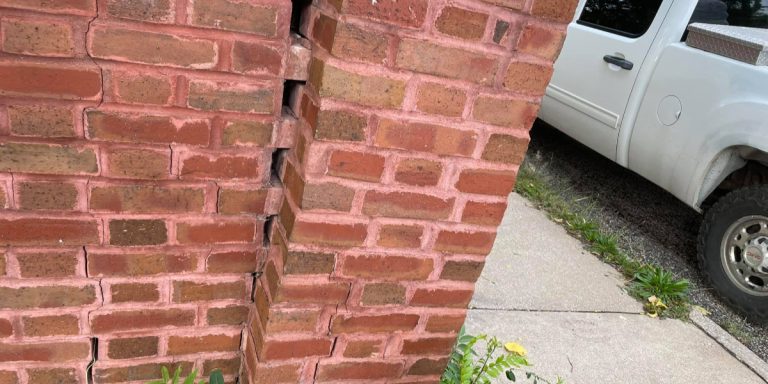
One of the most obvious signs of damage is visible cracking or movement in the masonry. Cracks can appear in different patterns, each revealing something about the problem.
-
-
- Vertical cracks often indicate minor settlement or shrinkage.
- Horizontal cracks may suggest foundation pressure or water damage.
- Stair-step cracks in brick walls can point to shifting or settling foundations.
-
Loose or missing bricks are also a red flag. They weaken the overall structure and allow water to enter, accelerating the deterioration process.
Our team at R.A. Masonry repairs these issues with precision, matching brick or stone texture and color to restore both strength and appearance.
2. Deteriorating or missing mortar joints
Mortar joints are the “glue” that holds masonry together, and when they begin to crumble or erode, the entire structure becomes vulnerable.
If you notice gaps between bricks, soft or powdery mortar, or mortar that falls out when touched, it’s time for tuckpointing. This process involves removing damaged mortar and replacing it with new material that matches the original.
At R.A. Masonry, we provide professional tuckpointing services that restore structural integrity while keeping your home’s exterior looking authentic.
3. Spalling or flaking brick surfaces
Spalling occurs when the surface of a brick or stone begins to flake, chip, or peel away. It’s usually caused by moisture that enters the masonry, freezes, and expands. Over time, spalling can cause bricks to lose their protective outer layer, leading to deeper cracks and instability.
If left unaddressed, spalling can eventually lead to full brick failure or even collapse in extreme cases.
R.A. Masonry specializes in brick replacement and restoration, using high-quality materials and sealants that prevent future moisture damage.
4. Efflorescence or white staining
If you’ve seen a white, powdery residue on your brick or stone surfaces, that’s efflorescence. It forms when water carries soluble salts to the surface, leaving a chalky deposit as it evaporates.
While efflorescence itself isn’t harmful, it signals that moisture is moving through your masonry. This can mean cracks, failed mortar joints, or unsealed surfaces are allowing water to seep in.
R.A. Masonry offers masonry cleaning and waterproofing services to remove stains safely and prevent further moisture infiltration.
5. Bowing or bulging walls
A bowing wall is a serious structural concern. It often results from hydrostatic pressure (when water builds up in the soil around your foundation) or foundation movement. This pressure pushes against your wall, causing it to curve or bulge outward.
If your wall appears uneven or leans slightly, call a professional immediately. R.A. Masonry can assess whether you need structural reinforcement, wall rebuilding, or foundation repair to prevent further movement and ensure safety.
6. Water leaks or damp interiors
Water stains, musty odors, or peeling paint inside your home can indicate water is seeping through your brick or stone exterior. These issues often start small but worsen over time, leading to mold growth and costly interior repairs.
Exterior masonry waterproofing helps prevent water from entering your home in the first place. At R.A. Masonry, we apply professional-grade breathable sealants that protect your masonry without trapping moisture inside.
7. Crumbling chimney structures
Chimneys are especially prone to damage because they’re constantly exposed to weather on all sides. Common signs of chimney problems include cracked bricks, missing mortar, or leaning sections.
These issues can lead to dangerous conditions if not repaired promptly. R.A. Masonry provides complete chimney repair and restoration services, including tuckpointing, crown repair, and waterproofing, to restore safety and performance.
The importance of addressing damage early
Minor masonry issues may not seem urgent, but delaying repairs can lead to major expenses later. Cracked or weakened mortar allows water to penetrate deeper into the structure. When that water freezes, it expands, creating even more cracks and instability.
In severe cases, this cycle can cause sections of your wall or chimney to collapse. Timely maintenance is far more affordable and effective than emergency restoration work.
At R.A. Masonry, we emphasize long-term solutions rather than quick fixes. Our repairs are designed to match your existing materials, ensuring both durability and curb appeal.
How R.A. Masonry repairs brick and stone structures
Every repair begins with a detailed inspection to identify the cause of the problem. Once we understand the source of damage, we develop a tailored plan to restore the masonry.
Our typical repair process includes:
-
- Inspection and evaluation: We assess the extent of the damage and determine whether it’s surface-level or structural.
- Cleaning and preparation: Damaged areas are cleaned to ensure proper adhesion for new materials.
- Tuckpointing or joint repair: Old mortar is removed and replaced with new mortar that matches in color and strength.
- Brick or stone replacement: Any loose, broken, or spalled bricks are carefully replaced with new materials that blend seamlessly.
- Waterproofing and sealing: A breathable sealant is applied to prevent future water damage while maintaining natural vapor flow.
This process not only restores your home’s appearance but also reinforces its long-term structural integrity.
Case example: brick wall restoration in Rock Island
A homeowner in Rock Island, IL, contacted R.A. Masonry after noticing cracks forming in their century-old brick home. The cracks were spreading quickly and water was beginning to leak inside.
After inspection, we discovered deteriorated mortar joints and several spalling bricks caused by years of freeze-thaw damage. Our team tuckpointed the affected areas, replaced damaged bricks, and applied a waterproof sealant. The wall was restored to its original condition, and the homeowner now enjoys a fully sealed and stable structure that retains its historic character.
How to prevent future masonry damage
Preventive maintenance is key to protecting your brick and stonework for decades to come.
Simple steps to protect your masonry include:
-
- Inspect your exterior walls and chimney at least once a year.
- Keep gutters and downspouts clear to direct water away from your foundation.
- Ensure soil around your home slopes away to prevent pooling.
- Schedule professional waterproofing every few years.
- Address cracks or loose mortar as soon as they appear.
By staying proactive, you’ll avoid expensive restoration projects and keep your home’s masonry looking strong and beautiful.
Areas we serve
R.A. Masonry proudly serves homeowners and businesses throughout the Quad Cities, including:
-
- Moline, IL
- Rock Island, IL
- East Moline, IL
- Silvis, IL
- Davenport, IA
- Bettendorf, IA
- Milan, IL
- Coal Valley, IL
We offer brick and stone repair, tuckpointing, chimney repair, foundation waterproofing, and masonry restoration for both residential and commercial properties.
Protect your investment with expert masonry repair from R.A. Masonry
Don’t wait until small cracks turn into costly repairs, trust R.A. Masonry to restore and protect your brick or stonework.
Our licensed and insured masons have years of experience restoring homes across Moline and the Quad Cities. Whether you need tuckpointing, brick replacement, or foundation waterproofing, we provide quality workmanship that stands the test of time.
Call (309) 230-6064 or request an estimate online to schedule your inspection today. R.A. Masonry proudly serves Moline, Rock Island, Davenport, and nearby Illinois and Iowa communities with trusted masonry repair services built to last.